Argon gas is one of the most important inert industrial gases that plays a key role in sensitive heat and surface processes due to its very high chemical stability. This gas, with the chemical formula Ar, is supplied in standard cylinders in compressed and pure form. It is widely used as a cover or protective atmosphere in welding (especially TIG/MIG welding on aluminum alloys, magnesium, and stainless steel), industrial glassmaking, metallurgy, and the electronics industry. The chemically inert feature of argon gas stabilizes the arch, reduces surface oxidation, and improves final product quality.
Applications of Industrial Argon Gas
Welding and Cutting (TIG/MIG and Plasma)
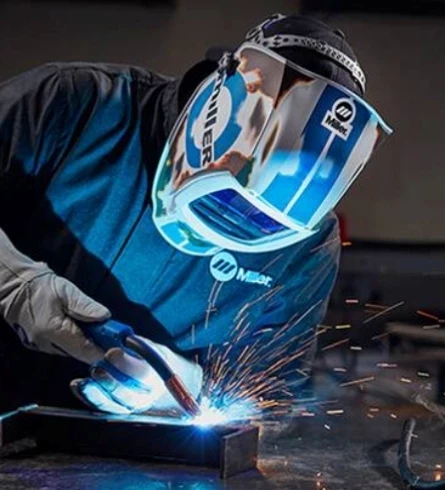
Argon is used as a protective atmosphere for arch stabilization and prevents air contact with molten metals. Result: easier start of the arch, more homogeneous penetration, and a welding surface free of unwanted oxides, specifically in light alloys and steel.
Metallurgy, Casting, and Heat Treatment
It is used in molten degasification, ineffective stirring, the prevention of oxidation in furnaces, and creating a protective atmosphere. It improves the structural quality and mechanical properties of the final piece.
Electronic, lamp manufacturing, and Glass industries
This gas is used for filling lamp bulbs/ fluorescent lamps, glass manufacturing, and vacuum processes as the filling gas or inert cleaner, and prevents unwanted reactions.
Metal 3D Printing and Advanced Chip Removal
In SLM/DMLS and laser machining, Ar creates a stable atmosphere to reduce oxidation, inclusions and to improve product properties.
Packaging and Food industries (MAP)
This gas is used as an inert component in modified atmosphere packaging to preserve products longer and reduce oxidation.
Comparison With Industrial Oxygen
While industrial oxygen is used for combustion acceleration and flame temperature increase, Argon is merely used to create an inert atmosphere to preserve the surface and final product quality. These two approaches are supplementary in many production lines.
Advantages and Constraints of Industrial Argon Gas
Advantages
• Chemical inertness: prevention from oxidation and undesired reactions
• Arc stability and improved cutting/welding quality, cleaner final surface
• Compatibility with a wide range of sensitive alloys (Al, Mg, SS)
Constrains and Risks:
• Higher costs compared to some other gas mixtures or nitrogen
• Suffocation risk in closed areas (Argon is odorless and heavier than air and displaces oxygen)
• Need for precise control of flow rate/purity to reach a stable quality
Accessories and Technical Considerations of Industrial Argon
• Using an argon-compatible regulator
• a precise flowmeter, and standard connections
Argon Gas Cylinder and Tank
Gas cylinders in different capacities are used for safe storage and transportation of industrial oxygen gas:
• 5 Liter Argon cylinder
• 10 Liter Argon cylinder
• 20 Liter Argon cylinder
• 40 Liter Argon cylinder
• 50 Liter Argon cylinder
Safety, Storage, and Transportation of Industrial Argon
• Inflammability: Argon is incombustible, but it can displace the oxygen in the room and cause suffocation
• Suitable ventilation: Sufficient ventilation and monitoring of the available oxygen are necessary in closed areas.
• Safe storage: Cylinders must be kept in a vertical position, restrained, and away from impact/ heat; close the protective cap when cylinders are not in use.
• Periodic tests: hydrostatic test, periodic inspection of cylinders, and recording the results are necessary.
Price and Terms of Purchase for Industrial Argon Gas
Price determinant factors: purity/ grade, cylinder capacity, gas pressure, transportation distance, and market fluctuations
Purchase of Industrial Argon Gas
Akhavan Kalantari Company provides Argon gas with the highest purity and quality. Contact us now for a free consultation and price inquiry.
| Argon (gas) |
|
AR |
| Purity |
Grade |
Type |
| 99.9 |
3 |
Industrial |
| 99.99 |
4 |
Quantometric |
| 99.999 |
5 |
Laboratory |
| Argon (liquid) |
|
LAR |
| 99.999 |
5 |
Laboratory |
.png "banner")