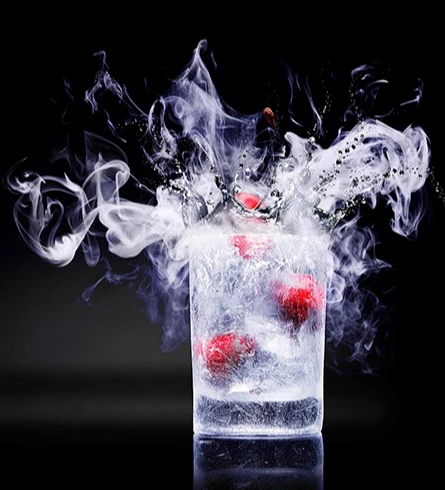
Nitrogen gas is one of the most widely used industrial inert gases, which has applications in protective processes, cooling, and safe transportation, due to its high chemical stability and dehumidification property. This gas (N2) is mainly obtained from fractional distillation of liquified air; it makes up about 78% of the earth atmosphere. Nitrogen is supplied in two forms: dried and colorless gas and industrial liquid nitrogen; the liquid form is stable at very low temperatures, and each unit volume occupies 700 times higher volume after evaporation. Nitrogen gas is provided in cylinders and liquid nitrogen at cryogenic tanks; they are used for making an inert reaction atmosphere, shock freezing, pipeline purging, and packaging of sensitive materials.
Applications of Industrial Nitrogen Gas
Inerting, purging, and pipeline pressurizing
This gas is used for the substitution of oxygen and humidity in tanks, reactors, and transport pipelines in chemical, petrochemical, and pharmaceutical industries; also, for the prevention of oxidation, undesired polymerization, and ignition risks.
Metal Working, Heat Treatment, and Additive Production
Protective atmosphere of furnaces, casting, normalization/carbonitration, laser cut (support gas), and stable atmosphere in metal 3D printing; reduction of oxidation and improvement of surface/structure quality.
Food industries, Packaging, and Shock Freezing
Substitutes air in the packaging process to increase product shelf life; industrial liquid nitrogen is used for IQF/ quick freezing, shock freezing, refrigerant transportation, and organoleptic quality loss.
Electronics, Semiconductor, and Laboratory
The carrying gas in chromatography, purging of clean rooms, protective coating for wafers/chips, and drying of vacuum equipment.
Automobile, Aerospace, And aviation
Inflating vehicle/airplane tire to stabilize the pressure and increase its lifetime, pressurizing different systems and airbags as an inert and stable fluid.
Comparison with Industrial Oxygen
Unlike industrial oxygen that promotes the combustion, nitrogen forms an inert atmosphere to preserve product quality and process safety; the supplementary usage of these two features is necessary in many production lines.
Advantages and Constraints of Industrial Nitrogen Gas
Advantages
• Inert and incombustible; suitable for oxidation and explosion risk control
• Effective drying, dehumidification, and product quality preservation
• High availability (atmosphere is the source) and cost-effective storage
Constrains and Risks:
• Suffocation risk in closed areas (substitution of oxygen)
• Necessity of high-volume expansion management when working with industrial liquid nitrogen
• Necessity of purity/flow rate control in delicate processes (food/ pharma/ electronic)
Accessories and Technical Considerations of Industrial Nitrogen
• Using a compatible regulator and flowmeter with nitrogen, humidity/oil filter in the compressed air pipeline
• For industrial liquid nitrogen: using a Doer/cryogenic tank, pipes, and an insulated vacuum jacketed (VJ) piping system, and vaporizers, if a gas phase is needed.
• Inspection for leakage and integrity of O-ring/valve; making sure that good air conditioning and oxygen sensors are available in closed areas
Nitrogen Gas Cylinder and Tank
Industrial Nitrogen gas is supplied in standard cylinders with common capacities; liquid nitrogen is stored and transported in Doer/cryogenic tanks:
• 5 Liter Nitrogen cylinder
• 10 Liter Nitrogen cylinder
• 20 Liter Nitrogen cylinder
• 40 Liter Nitrogen cylinder
• 50 Liter Nitrogen cylinder
Safety, Storage, and Transportation of Industrial Nitrogen
• Risk of suffocation: never work in confined spaces without an air conditioner/ oxygen sensors
• Severe refrigeration of liquid nitrogen: using gloves/ shield/ cryogenic apron, preventing skin contact; careful and controlled transportation
• Pressure/ expansion management: Use caps equipped with relief valves; never seal a cryogenic tank completely
• Safe storage: store cylinders vertically, restrained, away from heat or impacts; place a protective cap when they are not in use; perform periodic tests and inspections.
Price and Terms of Purchase for Industrial Nitrogen Gas
Effective parameters on price: purity/ grade (industrial/ laboratory), phase (industrial gas or liquid nitrogen), cylinder capacity or liquid volume, and charging pressure.
Purchase of Industrial Nitrogen Gas and liquid Nitrogen:
Contact us for the updated price of nitrogen gas or industrial liquid nitrogen.
| Nitrogen (gas) |
|
N2 |
| Purity |
Grade |
Type |
| 99.9 |
3 |
Industrial |
| 99.99 |
4 |
High Purity |
| 99.999 |
5 |
Laboratory |
| Nitrogen (liquid) |
|
LIN |
| 99.999 |
5 |
Laboratory |
.png "banner")