Applications of Medical Oxygen Gas
Medical oxygen gas is used in all hospital segments and many therapeutic environments outside of hospitals as a vital respiratory gas. The most important applications of medical oxygen are:
Respiratory Support in the ICU and Emergency Units
In the intensive care unit (ICU), emergency, and internal medicine ward, medical oxygen is used to support respiratory patients with hypoxemia (blood oxygen drop). Patients with respiratory failure, pneumonia, COVID-19, shock, heart attack, or stroke, and any other severe conditions need oxygen therapy to stabilize their situation and increase blood oxygen saturation.
Operating room, Anesthesia, and Recovery
In the operating room, medical oxygen mixed with other medical gases and anesthesia gases, such as medical nitrous oxide, is used for suitable oxygenation of the patient during general anesthesia. After the surgery, oxygen is necessary to help the respiratory system recover to a stable condition in the recovery unit.
Oxygen Therapy in Pulmonary and Chronic Patients
In patients with chronic lung disease (such as COPD, pulmonary Fibrosis, and some Cardiopulmonary Patients) Medical oxygen can be a part of long-term treatment to help improve the life, reduce dyspnea symptoms, and increase activity tolerance in patients. In these cases, oxygen is delivered to patients via a concentrator, gas cylinder, or a central system by equipment like nasal cannula and oxygen masks.
Application in Ambulance and Pre-hospital Systems
In pre-hospital emergency systems such as ambulances, medical oxygen is one of the main gases used for cardiopulmonary resuscitation (CPR), trauma, heart attacks, and acute respiratory problems. In these conditions, oxygen is delivered to the patient with a suitable flow rate to keep his vital conditions stable before reaching a hospital.
Applications for Neonatal and NICU Wards
In a neonatal intensive care unit (NICU), medical oxygen is used for premature babies or those with respiratory disorders, with higher precision and controlled concentrations. The correct adjustment of the oxygen concentration and pressure is very important in this group of patients.
In all these applications, medical oxygen gas is the main basis of oxygen therapy, along with other medical gases and respiratory equipment (ventilator, BiPAP, CPAP, …).
Advantages and Constraints of Medical Oxygen Gas
Advantages of Medical Oxygen Gas/ Liquid
• Increase the oxygen saturation in blood and help to correct hypoxemia in acute and chronic patients
• Play a key role in Cardiopulmonary resuscitation, operating room, ICU, and emergency ward
• Possibility to be used in different modes of oxygen therapy: nasal cannula, simple ask, mask with reservoir, ventilator, …
• Possibility of supply in gas cylinders/ liquid reservoirs
• Improving the symptoms of dyspnea, increasing the activity tolerance, and improving the quality of life in patients with chronic pulmonary disease
Constrains and Risks (respiratory and systemic)
Although oxygen is a vital element, incorrect consumption might be dangerous:
• Oxygen toxicity: long-term inhalation of oxygen at very high concentrations, especially pressurized oxygen, can hurt the lung tissue, and in special cases, hurt the nervous system
• Breathing control disorders in some patients: in patients with chronic obstructive pulmonary disease (COPD), indiscriminate prescription of oxygen with high concentration can result in reduced natural simulation of respiration and CO2 retention.
• dryness and respiratory tract irritation: dry oxygen free of humidity can cause respiratory tract irritation and result in dryness, cough, or irritation; a suitable humidifier should be used if necessary.
• Increased risk of fire: Oxygen is not flammable itself, but it can increase combustibility considerably; any flame, spark, or cigarette in an oxygen-rich environment can be very dangerous.
Therefore, medical oxygen should only be used according to prescriptions and therapeutic protocols, and with a specific dosage, flow rate, and concentration, under the supervision of the treatment team; any arbitrary adjustment of the oxygen flow rate by the patient can be very dangerous.
Accessories and Technical Considerations of Medical Oxygen
Medical gas equipment and standard respiratory systems are needed for effective and safe usage of medical oxygen. The most important required equipment for medical oxygen includes:
• Oxygen regulator and manometer to reduce the cylinder pressure and adjust the output pressure in a safe range
• Rotameters or cylinders to adjust the flow rate (L/s) as prescribed
• nasal cannula, simple oxygen mask with a reservoir, and venturi mask for the breathing oxygen concentration adjustment
• Ventilator, BiPAP, and CPAP apparatus that mix medical oxygen with ambient air and exert positive pressure to airways (bronchi) in lungs
Pressure, flow rate, and oxygen concentration adjustments must be done according to the manufacturer’s instructions and internal protocols of the therapeutic center. Using industrial oxygen cylinders for a patient, instead of medical oxygen, is nonstandard and forbidden.
Medical Oxygen Cylinder and Tank
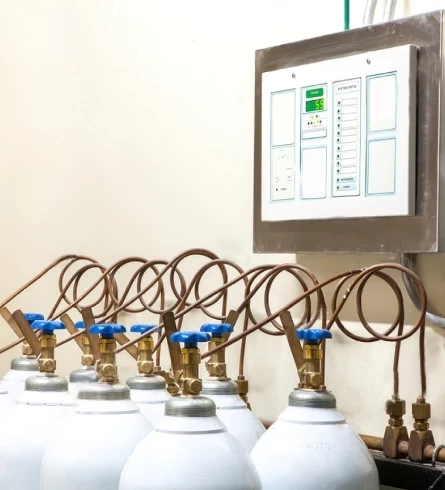
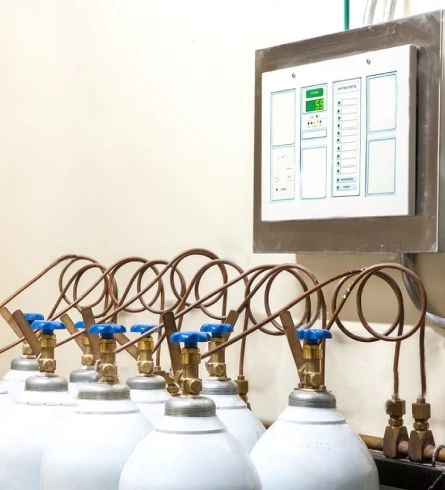
Medical oxygen is provided for the therapeutic centers in two main types: high-pressure cylinders and liquid oxygen cylinders connected to the central systems. Medical oxygen cylinders are generally supplied in these capacities:
• 5 Liter Medical Oxygen cylinder
• 10 Liter Medical Oxygen cylinder
• 20 Liter Medical Oxygen cylinder
• 40 Liter Medical Oxygen cylinder
• 50 Liter Medical Oxygen cylinder
Liquid oxygen storage tanks are for the large-scale supply and are connected to the piping network of a hospital, and oxygen gas is used at different points in the wards (wall outlets). In all cases, it is necessary to use standard cylinders with updated hydrostatic test, intact valves, and clear labeling (gas type, grade, and charging date).
Safety, Storage, and Transportation of Medical Oxygen
To make sure that patients and the personnel are safe, follow these instructions when storing and using medical oxygen:
• Keep in vertical position and restrained: Cylinders must be stored in vertical position and fixed with a suitable fastener or chain to prevent fall or impact.
• Keep away from heat sources or flames: although oxygen is not flammable, it intensifies the flammability of other materials. Cylinders must be kept away from fire, sparks, cigarettes, or hot plates.
• Avoid using oil or grease: never use oil or grease on the valve, regulator, and connections of an oxygen cylinder; this increases the danger of fire or explosion.
• Safe transportation: Use a special trolley or cart for cylinder transportation and avoid rolling or pulling the cylinders on the floor.
• Periodic inspection: Hydrostatic test date, integrity of the cylinder valve and body, and clearness of the labels must be controlled regularly.
Price and Terms of Purchase for Medical Oxygen Gas/ Liquid
Medical oxygen gas price depends on different parameters, including:
• Pressure, grade, and purity of oxygen according to INSO 3240 standard
• Type: gas cylinder or liquid oxygen
• Capacity and the number of cylinders (5, 10, 20, 40, and 50 L cylinders)
• Transportation distance, shipment conditions, and logistic costs
Our sales team can give you the updated medical oxygen price and offer consultation on the consumption rate and the type of product (gas/liquid).
Purchase of Medical Oxygen Gas
When purchasing medical oxygen gas, the gas quality, conformity with INSO 3240 standard, standard cylinder or tank, and supply stability play an important role in the safety of the patient and quality of the treatment. Akhavan Kalantari Company has the mandatory standard certificate for medical oxygen and a great experience in the gas manufacture and supply for hospitals. We offer medical oxygen in both gas and liquid form with high quality and purity, and in various capacities to hospitals, clinics, and therapeutic centers.
Contact our sales team for price inquiry, order registration, and scheduling a regular supply of Akhavan Kalantari medical oxygen. If your organization needs other hospital gases such as nitrous oxide, liquid nitrogen, carbon dioxide, too, we can offer a complete basket of Akhavan Kalantari industrial and medical gases to enable you to meet your needs from a reputable company.
| Oxygen (gas) |
|
O2 |
| Purity |
Grade |
Type |
| 99.7 |
2.7 |
Medical |
| Oxygen (liquid) |
|
LOX |
| 99.99 |
4 |
Laboratory |
.png "banner")